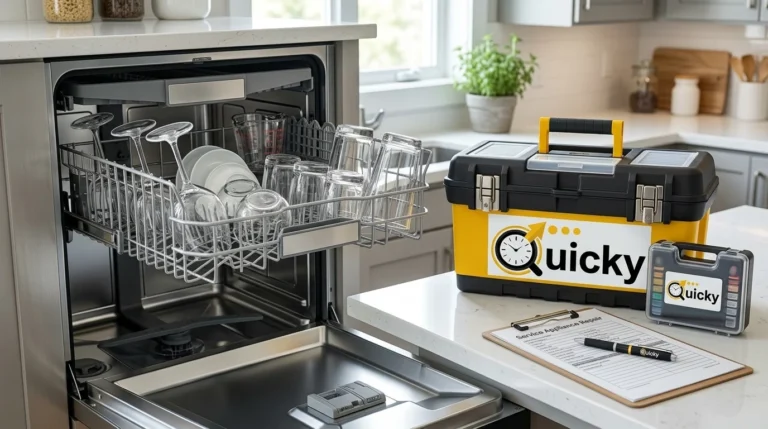
Opening your dishwasher after a full cycle expecting clean, dry dishes—only to find a pool of murky, standing water sitting at the bottom—is a major inconvenience. While a small amount of residual water around the drain filter sump is normal to keep internal seals moist, several inches of dirty water pooling across the basin indicates a drainage malfunction.
Ignoring standing water can lead to unpleasant kitchen odors, mold growth, and water damage to surrounding cabinets and flooring. Fortunately, addressing standing water usually comes down to resolving a few common blockages or pump failures.
1. Clogged Drain Filter and Sump Basin
The most common reason dishwashers fail to drain completely is a clogged drain filter assembly. Located at the bottom of the tub beneath the lower spray arm, the filter catches food particles, bone fragments, and labels before they enter the drain pump.
Over time, grease, coffee grounds, and food debris accumulate on the micro-mesh filter screens, creating a dense barrier that blocks water flow into the sump. Cleaning your dishwasher filter monthly under warm running water keeps water circulating freely and prevents standing water buildup.
2. Blocked Sink Garbage Disposal or Air Gap
In most home installations, the dishwasher drain hose connects directly to the kitchen sink garbage disposal or an above-counter air gap device. If you recently installed a new garbage disposal, the installer may have forgotten to knock out the plastic drain plug inside the disposal inlet. Without removing this plug, wastewater cannot flow into the disposal unit.
Furthermore, if your sink drain or garbage disposal is clogged with food scraps, wastewater will back up through the drain hose and return to your dishwasher tub. Running your garbage disposal before starting a dishwasher cycle ensures an open path for wastewater drainage, in line with home plumbing guidance from the Environmental Protection Agency (EPA).
3. Kinked or Obstructed Drain Hose
The flexible corrugated drain hose running from the dishwasher pump to the sink drain can easily become kinked, squished, or clogged with grease.
When dishwashers are pushed back into cabinetry during installation, the flexible hose can twist or bend tightly, restricting wastewater flow. Additionally, over years of use, solid food particles and solidified fats can build up inside the hose bends, completely sealing off the passage and forcing dirty water back into the tub.
4. Failing Drain Pump or Impeller
The drain pump uses a small electric motor and a rotating plastic impeller to force dirty water out of the dishwasher basin and up through the drain hose.
If a hard object like a broken glass shard or tooth-pick slips past the filter mesh, it can jam the pump impeller blades, preventing the motor from turning. Alternatively, if the pump motor windings burn out, the pump will fail to activate during the drain portion of the wash cycle, leaving standing water behind.
5. Faulty Check Valve or Water Inlet Valve
The check valve is a small rubber flap located inside the drain port that allows water to flow out in one direction while preventing it from flowing backward. If the check valve becomes brittle, stuck open, or warped, dirty water from your sink drain can siphoning back into your dishwasher after the cycle finishes.
Scheduling professional appliance repair keeps internal valves, drain impellers, and pump circuits operating safely according to guidelines established by the Association of Home Appliance Manufacturers (AHAM).
Keep Your Kitchen Clean and Odor-Free
Standing water inside a dishwasher isn’t just unsightly—it creates a breeding ground for bacteria and strains internal motor seals. Cleaning filters regularly, inspecting drain hose routing, and replacing worn drain pumps early ensures your dishes come out sparkling clean every single cycle.